Mammut 9.5 Crag Eco Dry Rope
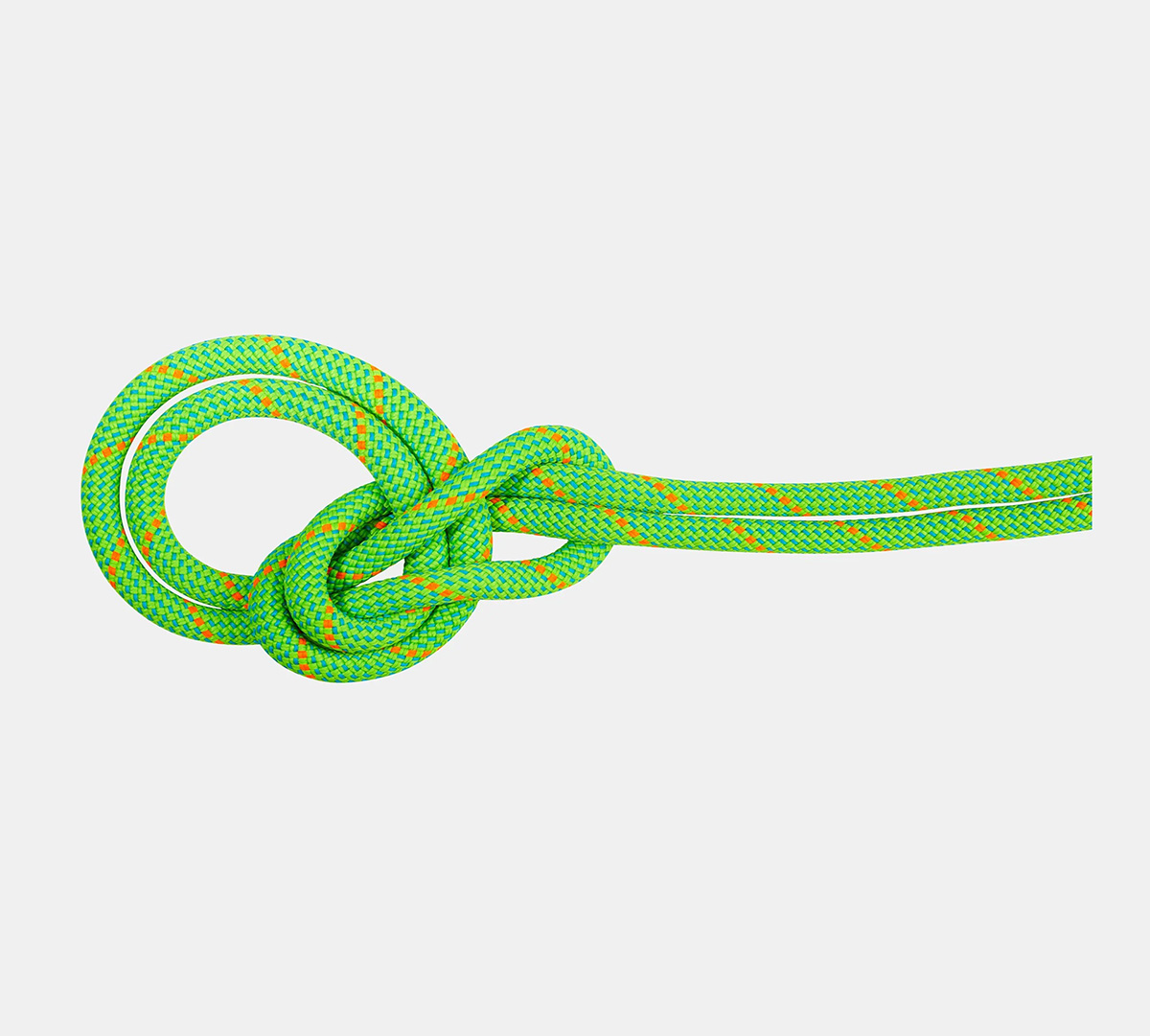
Moving towards a sustainable climbing industry future, Mammut has introduced their go-to cragging rope featuring PFC-free (perfluorinated compounds) dry treated climbing rope. At 9.5mm in diameter and 60g/meter, this rope is beefy enough to take some abuse when working your project but light enough to send! We had a chance to use this rope recently and here is our review below
First Impressions
Right out of the plastic, there are a few things I loved about this rope. First, we never had any coil issues with this rope. We took it right out of the packaging, laid it on our rope bag and got straight to work. There was no subsequent coiling or even the need to swap ends. This rope was ready to go from the second we started using it.
The second small feature thatI love are the coloured rope ends. Mammut made the effort to use red tape on both ends so spotting the end of the rope is easy. It sounds like a small thing but it makes a difference when you are tying over and over again.
General Feel
This rope finds a good balance between being thick enough to take some abuse but small enough to feel light on the redpoint. I would consider this rope ‘medium stiff’ and that suits its purpose well. It is certainly not the cable like the Tommy Caldwell 9.6 by Edelrid and it is also not the wet noodle that can describe the Petzl Volta 9.2. The sheath of this rope is decent. It does feel a little abrasive on the fingers from time to time. One thing that I love here is that sheath of this rope can take a lot of abuse and still look great. I hate getting a new rope and then climbing only for a day and the sheath already looking beat up. This thing looks great after multiple days of projecting and it makes you feel like you made the right choice!
Non-PFC Coating
We can’t speak enough about the industry push to remove perfluorinated compounds (PFCs). At the current moment, you will find these in every waterproof product on the market and its impact on the environment is hard to fathom!
See movie: Dark Waters.
Here is what Mammut has to say:
Highly effective for water repellency as well as stain and grease resistance, these chemicals fell under deep scrutiny in recent years due to their harmful impact on human health and wildlife. While PFC-based DWRs are safe to wear, the chemicals are non-biodegradable and travel easily through wind and water, allowing concentrations to accumulate over time and work their way up the food chain. Traces have been detected all over the world, from Everest Base Camp to human blood, setting off a wave of bans restricting or prohibiting their use. A critically important step, it has left the challenge of finding more responsible high-performance alternatives in its wake.
For a long time, the PFCs used as a standard for DWR treatments in the outdoor industry were long-chain C8 fluorocarbons. Favored for their exceptional durability, their near inability to break down catalyzed both their rise to dominance and their eventual downfall as governments across the globe recognized the inherent health risk and moved to ban production.
Unable to quickly find sustainable and comparatively performing alternatives, many in the outdoor industry – Mammut included – adopted shorter-chain C6 treatments to bridge the gap while continuing to investigate fluorocarbon-free possibilities. Offering good performance levels with by-products that break down faster, C6 treatments marked a clear improvement from their long-chain counterparts, but not a satisfactory long-term solution.
Mammut abandoned C8 PFCs entirely in 2015 and began stepping back from C6 PFCs already in 2016. Building on the momentum, the full Mammut apparel collection reached 85% PFC-free in summer 2022 and is set to reach 94% in summer 2024. The clear goal is to hit 100% PFC-free by 2025 .
Meanwhile, the quest for ever-more responsible waterproofing solutions that live up to the performance standards set by PFCs continues industry wide.
A PFC-free DWR is an effective and more responsible water repellent, so you can feel good about choosing gear with this label. Precisely because it is intended to break down over time, however, it is not as resistant to wash and wear (e.g., exposure to sunscreen, oil, and detergent), so the right care is important to maintain performance levels. Keep your PFC-free gear in action for many years to come with a regular wash and DWR refresh, using an eco-friendly impregnation spray found at your local retailer. A few simple steps well worth taking.
Challenges
Looking at the specifications of this rope, it says that there is a 30% elongation on the first fall, which appears to be quite common. One of the difficulties we found with this rope was the ‘bounciness’ when top roping or when working a move while being lowered. It was difficult to pull up on the rope and try a move without feeling like you were bouncing all over the place. That being said, we were trying routes that were 35 meters which could have contributed to the bouncing factor.
Specs
| General | |
|---|---|
Diameter | |
Type | |
Rating | Single (≤ 9.5mm) |
Treatment | |
Weight | |
Bi-Pattern | |
Middle Mark | |
UIAA Fall Rating | |
Impact Force | |
Static Elongation | |
Dynamic Elongation | |
Certifications | UIAA |
Materials | |
Ideal Use | Sport Climbing |
Overall
This rope has returned my faith in the 9.5mm rope diameter! With a medium stiffness that makes clipping easy and its abrasion resistance sheath, the Mammut 9.5 Crag Dry Rope feels like a good choice for anyone out there cragging on a regular basis. At the price point of $399.95, this rope is a little high end in the current rope market but I think its longevity will give you an extra push to use it for a long period of time. If you are making a choice between PFC vs non-PFC coatings, the extra money is well worth your vote for the planet!
Purchase Details
$399.95 – 70m @ Climb On Equipment in Squamish and Vancouver
$439.95 – 80m @ Valhalla Pure in Squamish